Category Archives: film review

Netflix Film Review “Look Away” (2018)

… this twist was shocking, but I was more shocked at how poorly the film played this strong card.

Maria (India Eisley) is a quirky and lonely teenager, bullied and suffering a barely-fleshed out eating disorder, her only friend is merely using Maria as a personal side-kick and as a kind of depressive foil to make herself look good. A depressed mother (Mira Sorvino) and a philandering plastic surgeon father (Jason Isaacs) make home life equally unbearable. But everything changes when Maria looks in the mirror to see that her reflection is alive. The reflection is called Airam (because, ya know — I mean, work it out for yourself!) and claims to have Maria’s best interests at heart. But does she/it really? Things take a turn for the dark when they swap places.

There’s no real tension regarding who or what the reflection is, the very first shot of the movie spells it out: Airam is Maria’s twin sister who died at birth. There also isn’t any real tension to the way Airam gets justice for Maria. Justice would be served, and I would just go, “Oh, okay, so that’s happened, I guess.” There felt like minimal pay-off. There could have been a slow build-up to key scenes of “justice”, there could have been a creepier tension built between Maria and Airam. Jason Isaacs does steal the movie, however, with his off-kilter and complex portrayal. The film missed another pay-off with certain revelations regarding Airam’s true fate/identity; this twist was shocking, but I was more shocked at how poorly the film played this strong card. There’s an awkward aggressively sexual scene between Maria and her Dad, but this, too, felt like it could have gone in a more interesting direction.

This was an entertaining film, but it kept me wondering why they didn’t explore the concept more. What happens to Maria when she’s in the mirror? Is there a whole other dark world in there, like ours but the opposite? Or is it happy and light, making her not want to come back while Airam is unhappy in Maria’s world? Why wasn’t justice performed more ironically; for example, why was Maria’s school tormenter not, despite having a secret crush on her, punished in a way fitting his relationship with Maria? He just gets kyboshed. And why isn’t Maria made to be more likable? Self-deprecating sense of humour, perhaps. An interesting hobby, maybe. She’s just pathetic and characterless.

Nice idea, some good acting, an entertaining albeit mindless way to spend 103 minutes, but devoid of tension. A Horror-thriller without much of either. The ending also felt incomplete. This film is a wasted opportunity.

2/5

© 2020 Bryan A. J. Parry

featured image from https://7lwy5tgst9-flywheel.netdna-ssl.com/wp-content/uploads/2018/10/Look-Away-final-poster.jpg

Netflix Film Review “Surrounded” a.k.a. “Frenzy” (2018)

A film so good they named it twice? No.

A group of young friends run a travel vlog, but on their next trip, their plane crashes into the ocean; the survivors find themselves adrift in the ocean and Surrounded by a pack of great white sharks who are in a feeding Frenzy.

A film so good they named it twice? No. This film is truly awful. I was spellbound by its awfulness; like watching a car crash in slow motion, I wanted to scream out but was frozen by the sheer horror.

The CGI is beyond ropey; I have seen more impressive special effects on free iPhone apps. Quite literally.

The plot is beyond ridiculous. Nothing at all makes any sense. Why does a fragile raft protect them from sharks but a sturdy boat doesn’t? Why do people jump head first at the sharks and try to take them on with a small knife? How could they lasso a rock on an island and pull it off to crush a shark? Why do the sharks act less like sharks and more like slasher movie baddies? And why do the sharks… growl?(!!) I could go on and on.

The acting is embarrassing; I’ve seen far better in GCSE drama. Really, I’m not overdoing this; the worst actors I’ve ever seen in GCSE drama were more accomplished thesps. Unbelievable reactions to everything. Not a thing was good.

Editing is a mess. Things appearing and disappearing. Sharks becoming further away for no reason at all.

There is no tension or sense of horror, and the island and the deep blue itself seem very fake.

I cannot understand why they bothered to make this film. It is so clearly without any value. I’ve seen better things by YouTubers. It doesn’t even work if watched as a spoof. This is one of those rare films that really has nothing to recommend it, nothing at all, not even the “so bad it’s good” factor. Even for a TV movie, this is dire stuff. It’s actually hard for a film to be quite this worthless.

The only good point of this film is that if you are a budding actor/writer/director/producer who’s having an existential crisis and moment of self-doubt, you can look at this and be like, “I mean, that got made, so I at least stand a chance, right?”

Abominable.

1/5

© 2020 Bryan A. J. Parry

featured image from https://www.imdb.com/title/tt8805150/mediaviewer/rm2363059456


Netflix Film Review “In The Tall Grass” (2019) @Netflix #Horror

 … would have made a cracking little episode of The Twilight Zone.

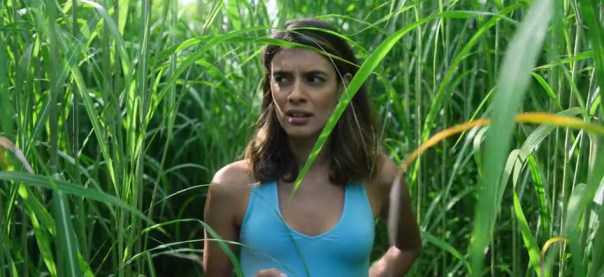
In the Tall Grass is based on the novella co-written by one-man-novella-industry Stephen King and his son Joe Hill. It’s a high concept mystery-horror-thriller that seems like it would have made a cracking little episode of The Twilight Zone.

We meet a dilapidated and forsaken church, as much a character in this story as any of the humans, whose carpark is a de facto layby for weary travellers. This is the only thing for miles around apart from motorway and countless acres of thick, tall, grass. When heavily pregnant Becky (Laysla de Oliveira) and her brother Cal (Avery Whitted) stop to rest, they hear a small lost boy (Tobin, Will Buie Junior) stuck within the thick growth pleading with them to help him get out. So far so simple. But when they enter the tall grass, they find themselves trapped in a nightmarish and constantly-changing maze where the very grass seems alive with an evil presence which is determined to keep them captive.

Such a high concept could backfire (see M. Knight Shyamalan’s The Happening). But In the Tall Grass initially worked quite well, particularly since it seemed like we were watching the marvellous Triangle (2009) but rebooted on a farm instead of the open sea. A silent, evil presence at the centre of the shifting grass maze had serious shades of King’s own The Tommyknockers and was quite convincing.

Unfortunately, what wasn’t convincing was some of the acting, particularly that of the usually great Patrick Wilson. Wilson hams it, chewing up the scenes like a demented Ash from Evil Dead III. Unfortunately, that acting did not sit tonally at all well with the rest of the film. As my wife put it when Wilson cracks open the can-o’-ham, “This is just silly now”. She left the room.

From this point onwards, the film really struggles with its own lack of source material, although this needn’t have been a problem: King’s own novella Rita Hayworth and the Shawshank Redemption proves that a novella can be weighty enough for a magnificent film treatment. Sadly, this novella just didn’t have enough to it. The whole venture descends into a shlocky slasher movie. There is some surreal and disturbing body horror, however, which was gruesome and great!

The film does manage to just about pull itself together for the conclusion which is satisfying. And, Wilson and Whitted aside, the acting is compelling and convincing. But the whole thing just about careens off the tracks as it finishes. It would have benefited greatly from curtailing its length from 101 minutes to an old school 90, maximum; 81 would have done fine. Even if Wilson hadn’t channelled Army of Darkness, there’s no escaping that this film was a Twilight Zone episode spread too thin. A very uneven, albeit enjoyable, result.

3/5

© 2020 Bryan A. J. Parry

featured image from https://d13ezvd6yrslxm.cloudfront.net/wp/wp-content/images/in-the-tall-grass-trailer.jpg

Netflix Film Review: The Hole In The Ground (2019) @SeanaKerslake @Netflix #HorrorMovie

100 word review here

A gut-churning slowburn … has her son really been replaced, or is it all in her own mind?

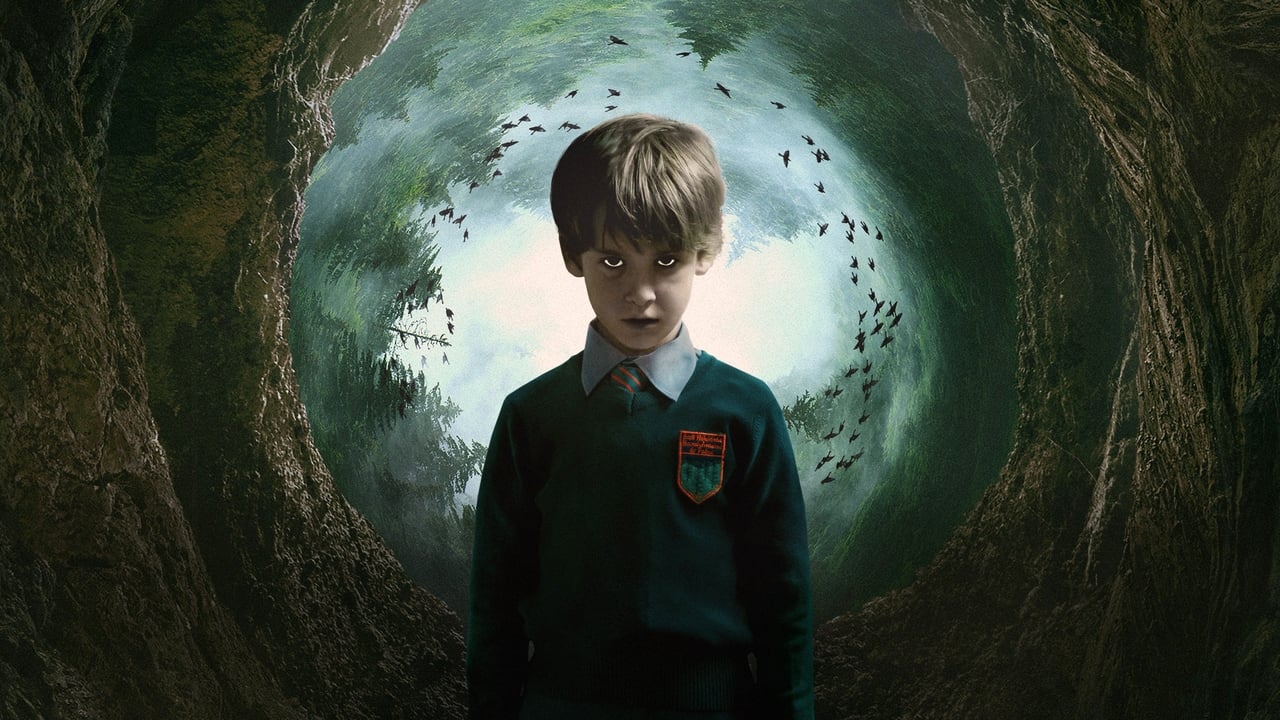
The Hole In The Ground is the remarkably well-accomplished debut feature from Irish writer-director Lee Cronin. Single mother Sarah (Seána Kerslake) has upped sticks to the remote Irish countryside with her eight year old son Chris (James Quin Markey). After Chris goes for a mysterious midnight stroll in the nearby forest, Sarah begins to notice disturbing changes in his character. Is this even her son at all? Cleverly, rather than Cronin have Chris’s behaviour deteriorate, the opposite occurs; where once he was sullen, withdrawn, and shy, he becomes calmly positive, controlled, and popular at school. But there’s just something off about this change of character, something that only a mother would notice, and I have to say wonderfully sold by young actor James Quin Markey. Seána Kerslake also convinces.

A gut-churning slowburn, this horror-thriller reminds me distinctly of 2014’s equally nerve-shredding The Honeymoon. It also shares DNA strands with The Babadook; has her son really been replaced, or is it all in her own mind? Just as in The Babadook, we start to fear for what this tormented mother might do to her own child, whilst also fearing that she is right.

The dank forest is beautifully shot and feels ancient, like nefarious creatures from Celtic myths might indeed dwell there, every tree seeming to have its own personality. The sinkhole in the centre of the wood projects an eerie and malevolent presence.

We are kept guessing until the very end: has Chris been replaced, or is his mother losing her mind? Credit again to Lee Cronin for eschewing any of the tempting and obvious potential twist-endings that the film could suggest. Rather, I found the ending befitting and equally horrifying. Without giving the game away, I can say that this family will never be quite the same again.

Genuinely disturbing, the psychological horror builds slowly but powerfully. How does it compare to other “forest horror” films? Fans of The Honeymoon should definitely watch this, fans of The Blair Witch Project might like it, and fans of Cabin Fever could probably give this movie a miss.

4/5

© 2020 Bryan A. J. Parry

featured image from https://image.tmdb.org/t/p/w1280/wTnFy6B5QCeRgjgCGBGlZaDESJ1.jpg

Netflix Film Review: The Hole In The Ground (2019) #100WordReview @SeanaKerslake @Netflix #HorrorMovie

A gut-churning slowburn … has her son really been replaced, or is it all in her own mind?

The Hole In The Ground is the remarkably well-accomplished debut feature from Irish writer-director Lee Cronin. Single mother Sarah (Seána Kerslake) has upped sticks to the countryside with her eight year old son Chris (James Quin Markey). After Chris goes for a mysterious midnight stroll in the nearby forest, Sarah begins to notice disturbing changes in his character. Is this even her son at all?

A gut-churning slowburn, this horror-thriller recalls 2014’s equally nerve-shredding The Honeymoon and shares DNA with The Babadook. Convincing central performances and potent sound design and cinematography.

We are kept guessing until the very end: has her son really been replaced, or is it all in her own mind? A true delight.

4/5

© 2020 Bryan A. J. Parry

featured image from https://image.tmdb.org/t/p/w1280/wTnFy6B5QCeRgjgCGBGlZaDESJ1.jpg

FILM REVIEW: 12 Years A Slave

note: review originally published 2014

 … isn’t fit to tie the emotional and dramatic boots of Toy Story 3

12 Years a Slave is the third film from young British director Steve McQueen. Adapted from the diaries of Solomon Northup, the film is set before the American Civil War and tells the true story of a free black man from the northern United States who is kidnapped and sold into slavery in the south, subsequently spending 12 years trying to get back to his family.

There’s a big buzz around 12 Years a Slave. It seems to be this year’s in vogue film, dealing as it does with controversial subject material (blacks, slaves, impregnated black slaves). But let me tell you a secret, dear reader, something nobody dares speak, that nobody even dares think: the film, err, isn’t that great.

So it’s bad, then? Not at all. It’s actually fairly solid. But the glowing praise and universal acclaim that it’s garnered, along with the multiple Oscars that it will land**, have simply not been earned. Sadly, this film is exactly the kind that the lovies and wannabe intellectual journalist-types adore. Nobody wants to say the Emperor has no clothes because they’re scared it might make them look insensitive or, worse, uncultured(!) Gulp. But the film just doesn’t work. And how I desperately wanted it to work, how I crave to say this blew my mind.

So what is wrong with it?

It all comes down to one thing: you just don’t care what happens to Solomon. He’s clearly a good man, but his struggles and the eventual conclusion of the film leave you feeling rather cold. Crescendo, big moment, obstacle overcome at last, tears on screen – and yet I was left unmoved. Time after time. I thought: Am I bad? Have I become desensitised? Do I not care enough because he’s not white? Am I secretly heartless and/or a racist? Some of my best friends are… I looked around the cinema to see if someone, anyone was crying. But thankfully, my white middle-class liberal angst was for nothing, because nobody in the cinema cared either. All I could see in the half-light were puzzled faces looking around as if to say, “Oh, okay…?”. It’s not that the film’s bad – it’s not. It’s more that we simply don’t give a monkeys what happens to Solomon. He’s a good, upstanding man, sure, no real evil in him. He doesn’t deserve his plight. And he doesn’t do a single bad thing in the whole film. But then again, he doesn’t do a single good thing either. Indeed, he doesn’t do a single thing at all.

The film can be summarised thus: Solomon gets kidnapped, sold into slavery, keeps his head down and does a whole lot of nothing for two hours, Fin. Sad fact though it may be, a heart-rending true story does not a heart-rending drama make. Drama isn’t life, and we the audience need more reasons to emotionally invest in the guy and his journey other than, “he’s a normal bloke who gets kidnapped”. What kindness does he show his fellow slaves? What friendships does he make along the way? And, if you can forgive me a wanky film critic moment, how is the drama of the piece advanced in any way whatsoever by his actions be they instigating or reactive? Answer: it isn’t.

True story or not, the screenwriter and director needed to give us a reason to cheer for Solomon even if that means not being “true” to what really happened. The film presents Solomon with many opportunities to show his kindness, to forge relationships with others that we can really emotionally invest in, and yet he doesn’t. And no amount of understated performances, subtle plays on the material, or beautiful cinematography can disguise the fact that the central narrative of this film violates one of the fundamental rules of drama uncovered as long ago as by Aristotle: things shouldn’t just happen to the characters, but it should be through the characters’ actions that drama unfolds. Unfortunately, in 12 Years a Slave, stuff just happens to Solomon, and he just doesn’t do anything about any of it except occasionally to serve his own ends (and even then, in the most undramatic and inept fashion). The effect is we sit through two hours and thirteen minutes, and we just don’t care. A commanding performance by Chiwetel Ejiofor is nowhere near good enough to rescue the material.

But it’s not all bad. Indeed, and here’s the real tragedy: it’s most fairly good.

The film features relative unknowns in the lead roles, but also some heavy hitting A-listers in support: Brad Pitt, Michael Fassbender, and Benedict Omnibatch (I mean Cumberbatch: sorry, didn’t you know? New Hollywood rules state that a film is not allowed to go ahead unless Benedict Cumberbatch is cast… in any role… somewhere).

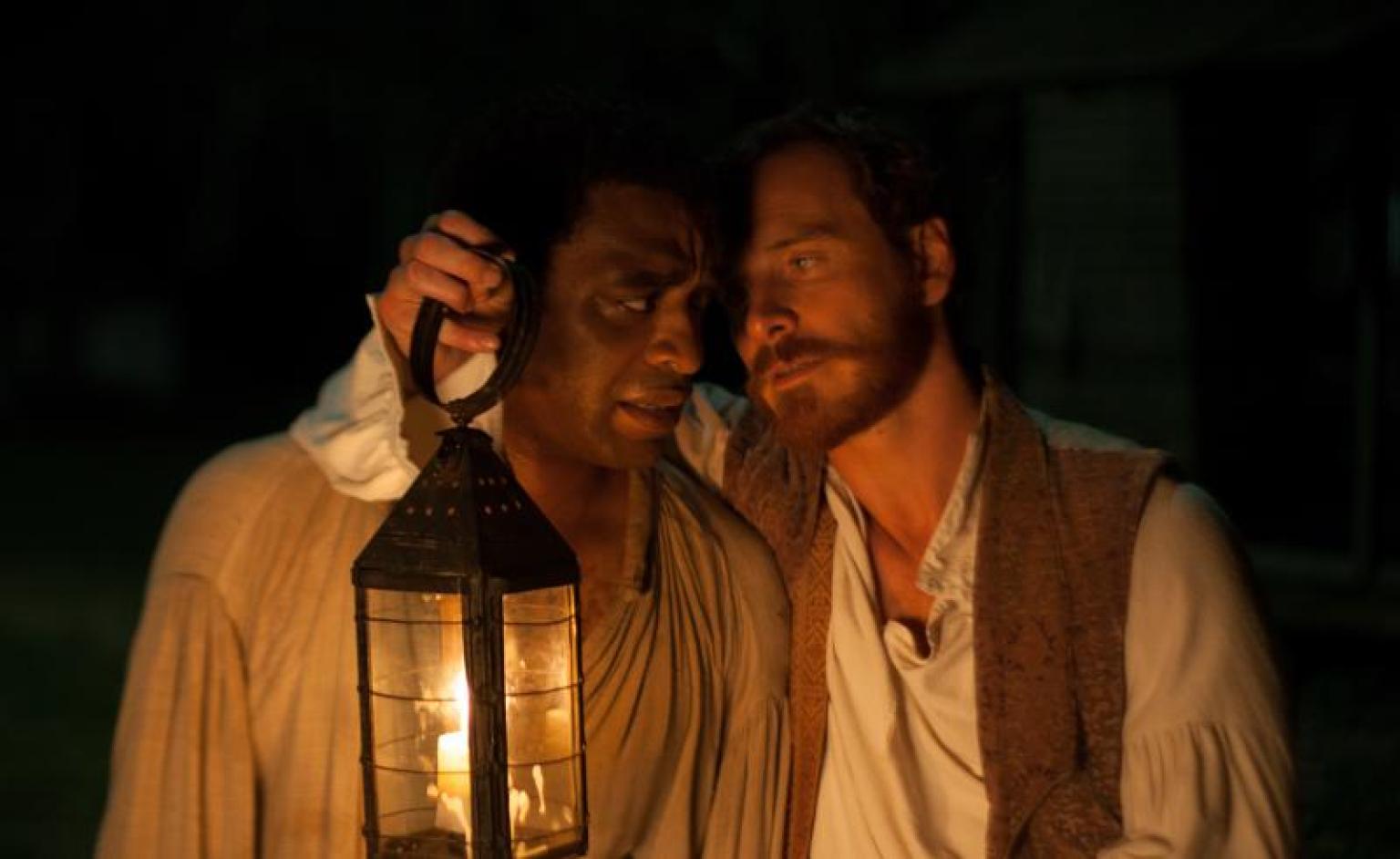
Fassbender in particular is mesmerising as slaver Edwin Epps. He’s a borderline alcoholic with conflicted emotions about his slaves. Yeah, they’re his property, but he doesn’t delight in brutalising them. He seems more a victim of his alcoholism and his henpecking wife (played well by Sarah Paulson, despite a lack of material to work with). And slave girl Patsey is richly portrayed by newcomer Lupita Nyong’O. The film is worth watching for her performance alone. Yet Brad Pitt’s cameo was slightly jarring: I couldn’t stop thinking, “Look! It’s Brad Pitt doing a Brad Pitt!”

Much to the film’s credit, it also does not slide into the predictable tropes of the slave genre. No, the slavers are not all evil; no, the blacks do not all form loving bonds with each other and sing Kumbaya round a campfire; no, the pretty black slave girl does not get knocked up by the white slave master. And for this, the film is to be commended; it gives us a fresh take on a familiar story. It shows the shades of grey that the situation engendered whilst still leaving us in no doubt as to the brutality and unspeakable wrongness of slavery. And yet it also doesn’t show caricature slavers joyfully lashing slaves for the yeehaw of it, nor does it go for sensationalism.

The direction was gripping. A reveal of one character’s whip wounds early on produced a collective gasp from the screening room. And there’s one particular shot in the field where the camera is locked on the scene for what seems an age without moving: the effect is disturbing and brings home the evil of slavery better than a thousand lashes ever could.

In short: I desperately wanted to say “best film since Schindler’s List”. But this “one of the best films ever” [Telegraph] isn’t fit to tie the emotional and dramatic boots of Toy Story 3, and was, sadly, much, much less than the sum of its mostly majestic parts.

**The film did indeed go on to win three Academy Awards.

3/5

review originally published in 2014
featured image from http://i.huffpost.com/gen/1329181/images/o-12-YEARS-A-SLAVE-REVIEWS-facebook.jpg

© 2014-2020 Bryan A. J. Parry

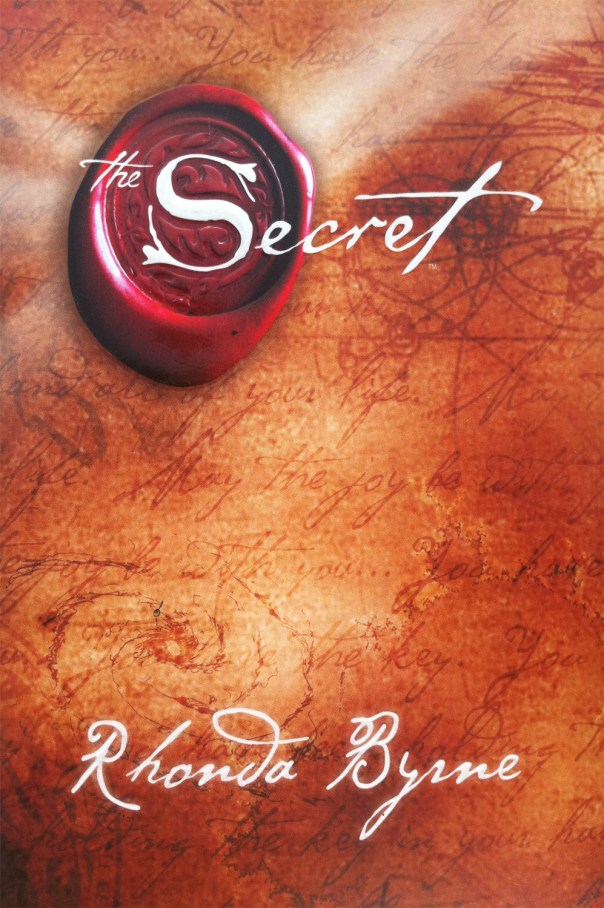
Netflix Film Review: The Secret @Netflix #NetflixReview

It’s like the guests are meant to be a spoof. I’m surprised they didn’t just get Armando Ianucci, Peter Serafinowicz, and that guy from Garth Merenghi to play the parts instead.

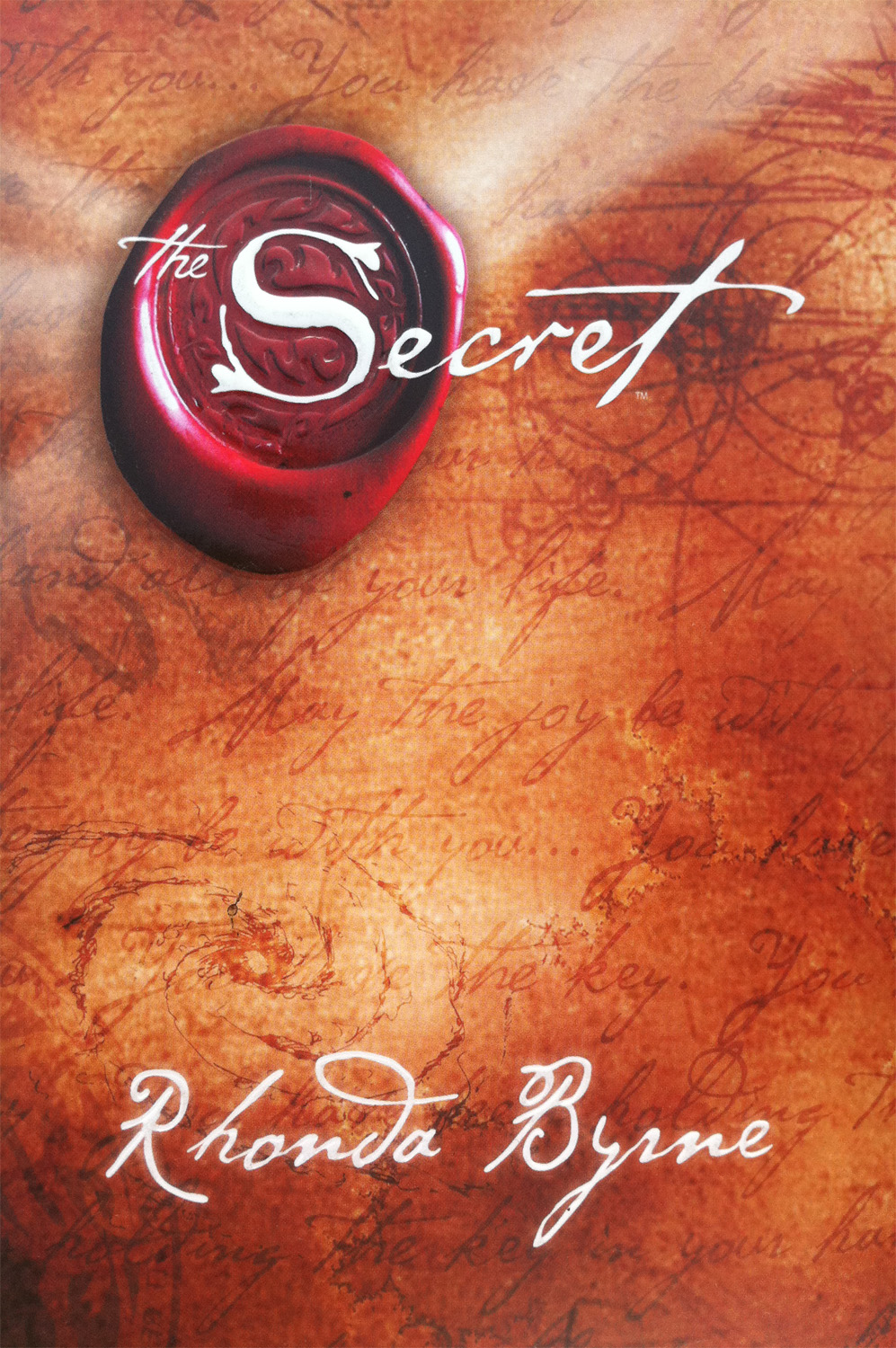
I don’t normally review films that aren’t new. But I just saw a film that was so outstanding, so unbelievable, and which moved me so profoundly, I just had to share it with you. I had to share… The Secret.

To coin a word, awfulsome: awesome in its awfulness.

Wow. Just… wow. Incredibly bad. I mean, what the heck!? I watched this at the behest of a colleague, and, sorry — WTF????? The fact that I’ve been reduced to the untermensch language of initialisms should show that no human words can express what this “film” is. A bestial scream of agony would probably articulate it well.

Firstly, how on earth did they manage to stretch literally one sentence into an entire ninety minute production???? “Whatever you think about will happen”. I kept expecting them to follow this sentence up with something, anything, but by the fifth minute I had already given up hope. Unreal how little substance there was. A 90 minute exercise in paraphrase. But people vehemently swear by The Secret, claiming it really works. Perhaps they believe this garbage because they’ve been brainwashed by hearing the same phrase, paraphrased, around six thousand times. Simple psychology; repeat the same thing over and over (and over) again, and you tend to start to believe it.

Secondly, how has this become a “phenomenon”? It’s very badly made, and totally ridiculous. I mean, where do I begin?

  • Laughable special effect “whoosh” flourishes every five seconds. Twinkly sounds, soft lighting that looks like it was added on Windows Movie Maker.
  • Talking heads/Experts who all look beyond insane: wild stare-y eyes, incredible haircuts, ridiculous teeth, and so on. It’s like the guests are meant to be a spoof. I’m surprised they didn’t just get Armando Ianucci, Peter Serafinowicz, and that guy from Garth Merenghi to play the parts instead.
  • And who are these guests? I mean, Google some of them and you’ll see what I mean. What. The. Eff!??! Crooks and fringe lunatics.
  • And what is with those titles: “metaphysician”, “visionary”!?!?!

WTF!!?! Sorry I keep saying that, but — WTF!?

The writers are surely having us on and rolling around in laughter behind the scenes, rubbing their diamond-encrusted ring-wearing hands, and spluttering “schmucks!”.

Some additional lowlights:

  • If you visualise cheques in the mail, you will literally receive cheques in the mail. No need to set up a business or get off your arse at all! But just so you don’t get carried away, the film-makers sagely advise us that we may still get the occasional bill apart from the cheques.
  • Medicine is useless. But chanting “cancer, cancer, go away” will surely destroy all metastasized growths.

I mean, sorry, The Secret was so cheap, so badly made, so idiotic, so ridiculous in every respect, the only thing this “film” deserves is the following sentence from me: whatever you do, please do NOT use “the secret” to attract free copies of “The Secret” to you…. (‘cos then they wouldn’t make money out of you) Deary me.

One fellow reviewer (on Netflix) said the following, and I think it’s hard to argue with him:

Sadly I wasted an entire 4 minutes of my life watching this utter tripe, before my own senses started to shut themselves down. Licking wasps or poking a massive bear in the face would result in less pain than having to sit through anymore of this new age, mumbo jumbo, hippy hokum. To Netflix: Can we introduce a rating system which allows us to score garbage content lower than 1 star? We could use this waste of hard drive space as a bench mark. For example, a terrible film would awarded 3 “The Secret” Turd Piles??

So why not one star, why two? Because it was so genuinely insane in every respect that it was actually marginally entertaining. And, despite the triteness of it, there is a nice core message: positivity of mind breeds further positivity. But it’s still turd.

2/5

featured image from https://readingraphics.com/uploads/2015/06/The-Secret_book1.jpg

review first published 8 October 2014

© 2014-2020 Bryan A. J. Parry
Netflix Film Review: P.S. I Love You (2007) @Netflix #NetflixReview @HilarySwank @GerardButler @LisaKudrow @MsKathyBates @Cecelia_Ahern

read the 100 word review here

the kooky humour is far less charming and funny than it thinks it is.

P.S. I Love You is a romantic comedy based on a quirky and compelling idea. A terminally ill husband, Gerry (Gerard Butler), arranges for ten surprise packages to be delivered to his wife Holly (Hilary Swank) in the months after his death. Think: posthumous and vicarious Bucket List. Based on Cecelia Ahern’s 2004 novel, the packages are Gerry’s way of helping his wife move on and live again.

Great idea, some genuinely moving sequences — all utterly undermined by the fundamental unbelievability of the acting and set-pieces. The husband’s better-than-Ed-Sheeran serenade is a stand-out moment of absurdity. Hilary Swank’s behaviour is more indicative of someone who’s just lost their cat — or a heel on her favourite shoes. And the kooky humour is far less charming and funny than it thinks it is. The best friend who suffers from self-diagnosed “rudeness” supplies most of the alleged comedy and gives us a not-in-the-least-bit tantalising “will-they-won’t-they” hook up with our grieving widow. Lisa Kudrow’s character (close friend Denise), whose whole shtick is kissing random guys to decide whether she’ll marry them or not in a kind of “does the tongue fit” twist on Cinderella, provides yet more flat comedy.

A disappointing effort from writer-director Richard LaGravenese whose previous screenplays include the wonderful The Fisher King and the beautiful The Bridges of Madison County. Perhaps he just isn’t as suited to working behind the camera as he is to working in front of the keyboard.

An odd film: it made me both tear up, and reach for the zapper. A flawed but potentially great film, P.S. I Love You‘s self-satisfied smugness, unbelievability and misplaced zaniness ruin it.

2/5

© 2017-2020 Bryan A. J. Parry

featured image from http://www.waitsel.com/actors/gerard_butler/ps_i_love_you-1.jpg

Netflix Film Review: No Good Deed (2014) @Netflix @thefilmreview @KermodeMovie @idriselba

Idris Elba is Colin, a charismatic and violent sociopathic criminal on the lam and winner of the Most Unbefitting Name Ever Award.

Idris Elba is Colin, a charismatic and violent sociopathic criminal on the lam and winner of the Most Unbefitting Name Ever Award. Whilst making his escape, he totals his car into a tree and legs it through the forest. The first house he stumbles upon is that of all-alone Terri (Taraji P. Henson) who is just putting her young kids down for the night. This charming stranger works his charisma, asks for help after his “accident”, and talks his way from the porch into the living room. Soon Terri is putty in his hands. But as they say, No Good Deed goes unpunished.

No Good Deed is a fairly standard crime thriller, but I mean that in the best way. It is gripping, entertaining, keeps us on the edge of our seats, but doesn’t really show us anything we haven’t seen before. Great performances from the small cast really sell this film and keep you engaged to the end.

There is one stand-out moment, however, an unexpected plot twist that made me choke on my coke and splutter, “Ohmigod, whuh!?”. The twist is really neat. But it isn’t so much clever, as the rest of the film is so run-of-the-mill, that you kind of don’t expect the twist at all. The twist is particularly effective as it isn’t done merely for the sake of it, as so often is the case, but actually has a punch which makes sense and gives an underlying logic which holds the picture together. I’ll stop there before I plot spoil.

All in all, a standard but very well-made and well-acted crime thriller which is a thoroughly enjoyable way to spend 84 minutes.

3/5

review originally published 14 September 2018

© 2018-2020 Bryan A. J. Parry

Netflix Film Review: Ghost Story (2017) @Netflix @ghoststorymovie #GhostStoryMovie


self-indulgent crap at its worst.

Starring Casey Affleck and Rooney Mara, this is A Ghost Story told from the perspective of the ghost. But unlike classic Oscar winner Ghost, where being a ghost is portrayed much like being alive, A Ghost Story paints a more realistic picture (if ghosts are realistic at all, which they aren’t): the ghost is silent, unable to effect change in the world, and robbed of all that made him a personality in life, such as voice, memory, and that dreamy Patrick Swayze quiff.

Ghost Story makes some interesting choices. It’s shot in 4:3, although it’s not apparent why. The ghost is portrayed as a man with a sheet over his head which, believe it or not, does actually work and isn’t ridiculous as it surely deserves to be. And our spectral protagonist never utters a word in death. The film is a tale of loss and how you struggle to come to terms to loss.

Well, “protagonist”, “tale”, “struggle”. Perhaps those aren’t the best words. The film actually has no plot whatsoever, let alone “tale” or “struggle”, and the “protagonist”, such as he is, doesn’t “tagonise” anything. And when I say “no plot”, I don’t mean in that hyperbolic jargonised English that “his head LITERALLY fell off”; I mean, quite actually, there. is. no. plot. Therefore I can plot spoil without plot spoiling for there is no plot to spoil. The unnamed couple cuddle in bed for several minutes without talking. Affleck’s character dies, which we don’t see. Mara’s character then sits around doing nothing, and I mean nothing: we see her eat a pie, in real time, for a full ten minutes. Eventually, she moves out of their house, someone else moves in, then they move out, then someone else in, and so on, until the house is knocked down. The ghost silent watches all of this. Fin. Literally nothing happens, and there is no character arc for our ghost or plot development.

Aristotle wrote in his Poetics, some 2300 or so years ago, that drama needs the following elements: a beginning, a middle, an end; plot, character, diction, thought, spectacle, music; a single central theme whose elements are logically related; that the dramatic causation and probability of events hangs on the characters’ actions and reactions; and catharsis of the spectators, that is, “to arouse in” spectators “feelings of pity and fear, and to purge them of these emotions so that they leave the theatre feeling cleansed and uplifted”.[1] A Ghost Story has none of these apart from “spectacle” (nice cinematography and visual effects) and “music” (sound effects, which were effective in building atmosphere). The whole film, in fact, feels exactly like a five minute A-Level student’s film project which has been inflated to 92 minutes and a massive budget.

Here are some snippets from IMDb user reviews.

“Worst film I’ve seen in a long, long time. 1/10”
“What a total waste of time. 1/10”
“Like watching paint dry. 1/10”
“Enough to make you think you have died! Do not bother! 1/10”
“Truly awful. 1/10. Boring, pretentious, irritating, amateur, self-indulgent”
“High rating on IMDb is inside joke about this movie. 1/10”
“The director thinks he’s Bergman and he is not. 1/10”
“A wonderfully hypnotic and philosophical film exploring the enormity of life. 8/10”
“A mind-alteringly realistic depiction of human life. 10/10”

This film isn’t so much “Marmite: love it or hate it”, as it is “hate it, or brainwash yourself into thinking you love it”. Do not believe the many wanker reviews or critics that have boosted this to a very respectable 6.9 on IMDb and, extraordinarily, a 91% Fresh Critical Consensus on RottenTomatoes.com, who declare that this film is “powerful” with a “passionate couple” at the core. The film is no such thing. It is self-indulgent crap at its worst. This really is a case of “the Emperor has no clothes”; fearful, mindless, cretinous film critics rate it highly as they are scared that to do otherwise would make them appear uncouth and uncultured and probably get their next schmooze fest invitation cancelled. Above all, nobody wants to say the emperor has no clothes.

The film’s not even saved by the “so bad it’s good” factor; this is the most tedious, boring piece of shit I have ever watched. And I do mean “ever”. Good news, though; that I managed to make it through the film without turning off or tearing my own eyeballs out means that the instanews social media whizz-bang world we now inhabit hasn’t completely destroyed my patience. One out of five — for spelling its own name correctly.

1/5

[1] https://www.cliffsnotes.com/literature/a/agamemnon-the-choephori-and-the-eumenides/critical-essay/aristotle-on-tragedy

review originally published 23 August 2018

© 2018 Bryan A. J. Parry

featured image from https://image.tmdb.org/t/p/original/sD94aixD7fMAc2e9ugbv4KQprBL.jpg